
Fayette County Busted Mugshots
A booking record starts when someone is processed into the Fayette County Jail. The jail sits at 221 S. 7th Street in Vandalia. The Sheriff's Office runs it. The arresting officer may come from Vandalia Police, the sheriff's department, Illinois State Police, or another agency entirely. So the office that made the arrest is not always the office holding the person. Timing matters too. The arrest and the booking can happen at different moments. What follows intake varies widely. A person might be cited and released, bonded out, transferred, or held in county custody. A copied arrest page can linger online long after the individual has gone home.
No county-hosted public roster, same-day booking feed, or booking-photo search appears in the official pages. That says nothing about whether the jail keeps internal records or photographs. The sheriff's page is the best starting point for agency contacts, FOIA information, and the inmate-information handout. For current custody, it points people to VINE rather than a photo gallery. Want a specific record or photo? A written request to the sheriff or the arresting agency is the direct route.
A booking photo marks one moment. It shows a person entering Fayette County custody. Nothing more. The case itself gets settled later. The real answer lives in the court file and its docket entries, not in the image.
Need the agency side? The Fayette County Sheriff's Office page lists official contact details for the department and its jail. It has no public booking-photo search, though. So anyone hunting busted mugshots from this county has to try other channels.
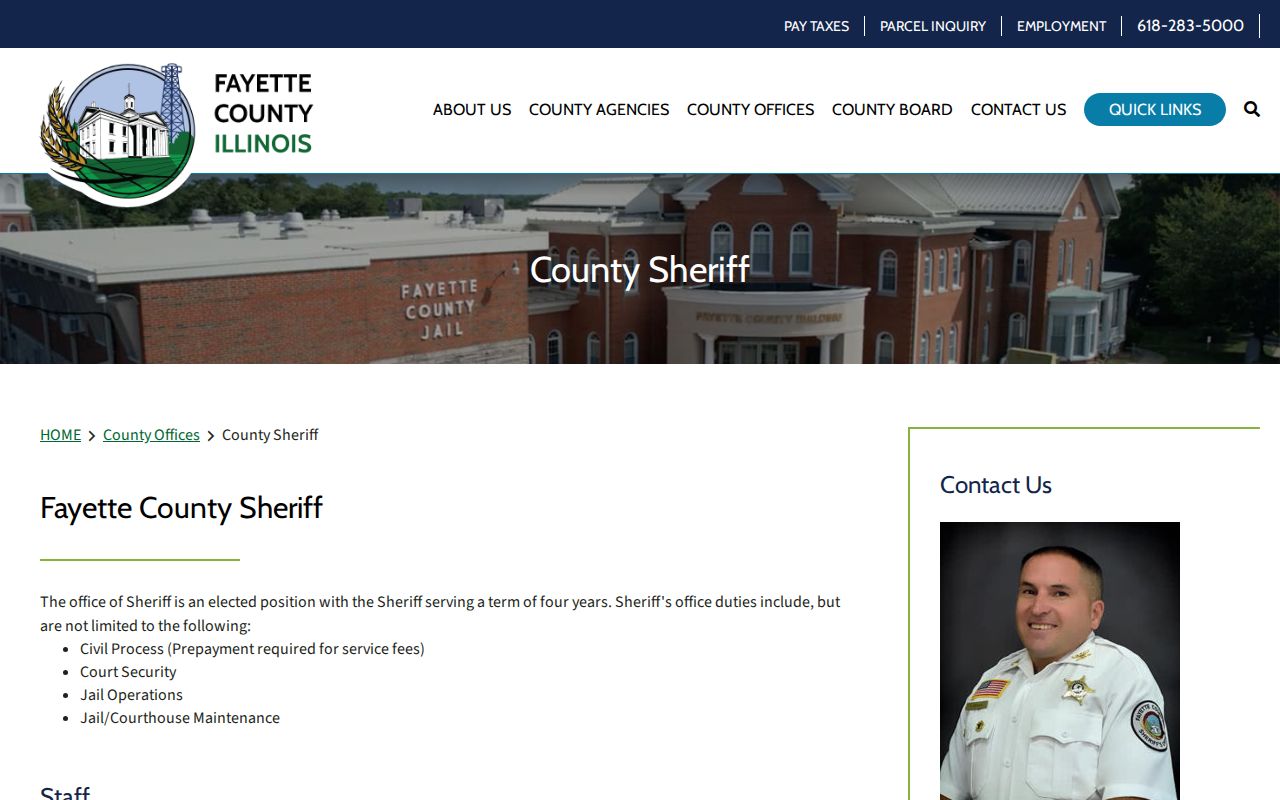
Here is the key distinction. The jail keeps booking records internally. The public cannot browse them at will. Residents who want a lawful answer about an inmate or an arrest lean on VINE or a FOIA request instead of a simple online lookup.
Fayette County Booking Fields
What goes into a Fayette booking record? Illinois jail standards define the booking and personal file, and 5 ILCS 140/2.15 lists the arrest-report fields the public can see. Treat any field list as an inventory, not a guarantee. Some items stay offline, and others may be withheld. Medical details, property records, fingerprints, and protected juvenile information never belong in a released copy.
| Field or event | What it shows |
|---|---|
| Full name | The identity used by the arrest or booking record. Check spelling and more than one identifier. |
| Booking number | The jail's administrative key for the intake. No public county result view was verified. |
| Booking or admission date and time | When the jail accepted the person, which may differ from the arrest time. |
| Arrest date, time, and place | The event details held by the arresting agency, subject to lawful redaction. |
| Arresting or investigating agency | The sheriff, city police, state police, or another agency connected to the event. |
| Charges as booked | The charges recorded at intake. They are not the final court result. |
| Bond or bond status | A release condition or payment status held by the jail or court. |
| Court date or first appearance | The next court event after booking, when it is available through the case record. |
| Release or transfer | When Fayette custody ended or the person moved to another authority. |
| Disposition | The later court result, such as a dismissal, plea, acquittal, or judgment. |
| Booking photograph | An intake image when created and legally releasable. No public Fayette photo portal was located. |
| Physical descriptors | Height, weight, hair, eyes, sex, and similar descriptors, when lawfully shown. |
Matching on a name alone is a rookie mistake. Check the agency, the date, the booking number, the birth date where law allows, and the court case number too. Copied pages can carry stale charges or point to the wrong person entirely. Courts amend counts all the time, so a case file may no longer match the original booking entry.
"Booking" also means less than people assume. It records intake into custody and nothing more. A release date closes county custody, not the court case. A transfer date tracks movement between facilities. Neither says anything about how the case ended up in court.
Getting Fayette County Busted Records
The Sheriff's Office handles Fayette County FOIA requests for jail and arrest records. Email a focused request to fcso@fayettecountyillinois.gov, or mail it to the Fayette County Sheriff's Office, Attention F.O.I.A. Officer, 221 S. 7th St., Vandalia, IL 62471. Posted FOIA hours run Monday through Friday, 8:00 a.m. to 4:00 p.m., minus holidays. City police made the arrest? Request the incident report from that city's records office along with the county booking material.
Narrow beats broad every time. Include the person's full name, the approximate arrest or booking date, the arresting agency, the location, and any booking or case number you have. Ask for the releasable arrest or booking record with the booking time, arrest time and place, charges as booked, bond details, release or transfer data, and any booking photo. Request that the officer state plainly whether a record is not held, does not exist, is not yet available, or is withheld under an exemption.
- Define the record. State the date or date range, agency, name, and record type. Ask for a photo only as part of the identified record.
- Use the sheriff's FOIA address. Email the request or mail it to the FOIA Officer at the Vandalia sheriff and jail address.
- Ask for a legal response. If a field or image is withheld, request the statutory basis and whether another agency holds it.
- Track timing and fees. Illinois general FOIA ordinarily uses a five-business-day response framework, with a possible additional five business days for listed reasons. Section 2.15 addresses covered arrest reports as soon as practical and no later than 72 hours after arrest, subject to exceptions.
- Keep the result separate. A released record or photo is not a current custody confirmation. Check VINE for custody and Judici for the later case.
Fayette County Sheriff's Office FOIA Officer
221 S. 7th St.
Vandalia, IL 62471
618-283-2141
fcso@fayettecountyillinois.gov
Monday-Friday, 8:00 a.m.-4:00 p.m., excluding holidays
Fees are modest. Inspection costs nothing, and the first 50 black-and-white pages are free too. After that, black-and-white copies run 15 cents per page, and a DVD or CD goes for 35 cents. Certified mailing carries a fee the office sets. Confirm the current schedule before sending payment. A photo displayed free on a third-party page tells you nothing about what the county charges.
For response timing, the Illinois general FOIA statute sets the deadlines. The sheriff's own page governs county contact details and current practice.
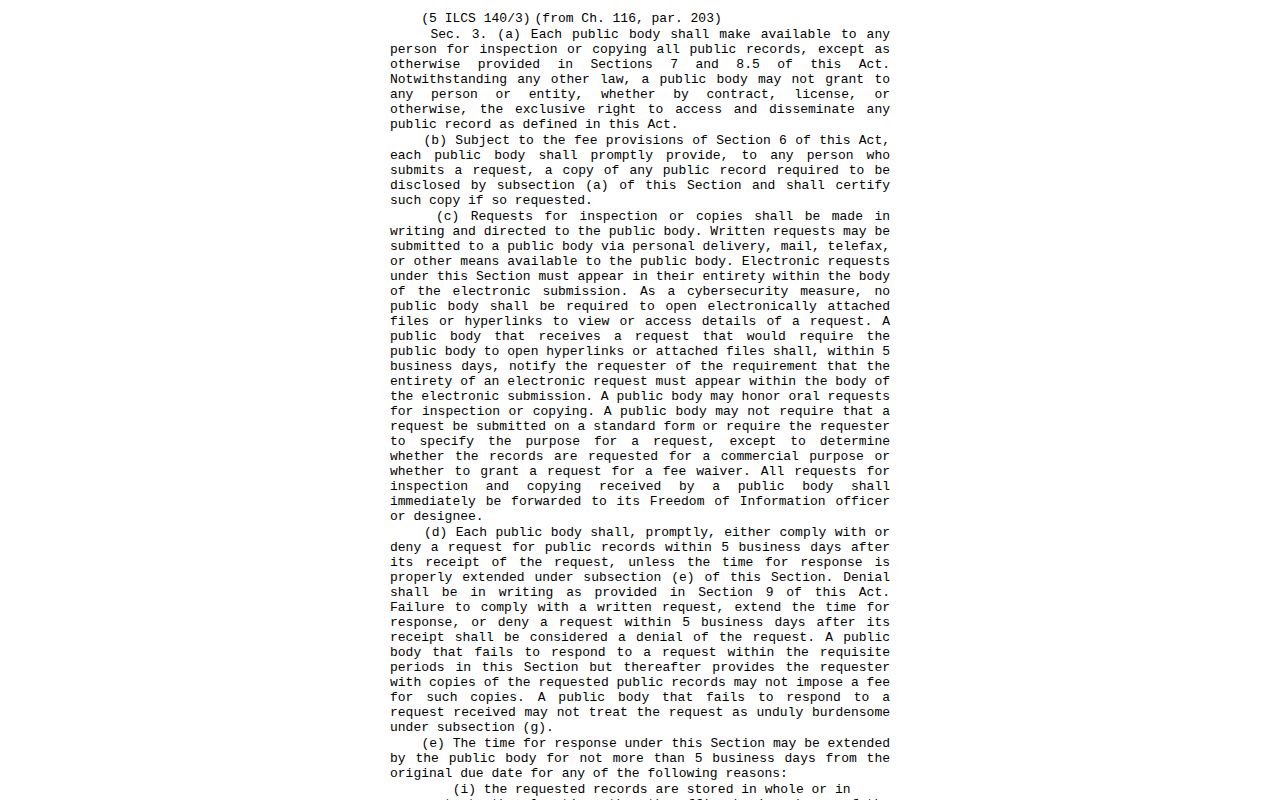
Answers come back in a few flavors: not found, not held, not yet available, or withheld. Each means something different. Whichever one lands in your inbox, save the details. Record the agency name, the response date, the record description, and any exemption cited.
Illinois Mugshot Rules and Corrections
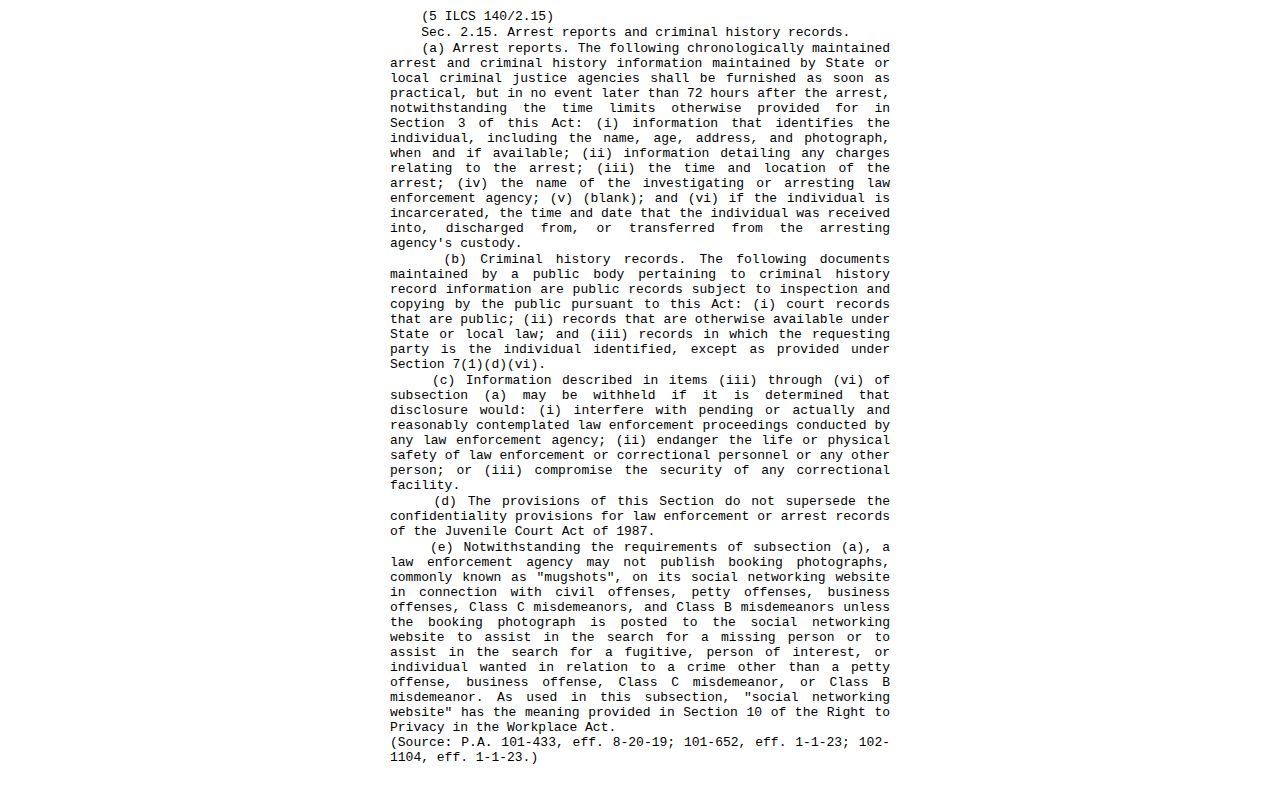
5 ILCS 140/2.15 is the statute behind every Illinois arrest report. It requires identifying details, a photo if one exists, the charges, the time and place of arrest, and the arresting agency. Jails must also log receipt, discharge, or transfer details for anyone incarcerated. Reports are due as soon as practical and no later than 72 hours after booking. The law carves out room for safety concerns, active investigations, jail security, and juvenile privacy.
Section 2.15(e) goes further. It bars police from posting booking photos on social media for certain lower-level offenses. The exceptions help locate a missing person, a fugitive, or a wanted individual tied to a qualifying crime. That is why a sheriff's Facebook feed never adds up to a full Fayette booking list. Nothing in the law forces the county to maintain a public gallery either. So a record can sit in county files without ever appearing online.
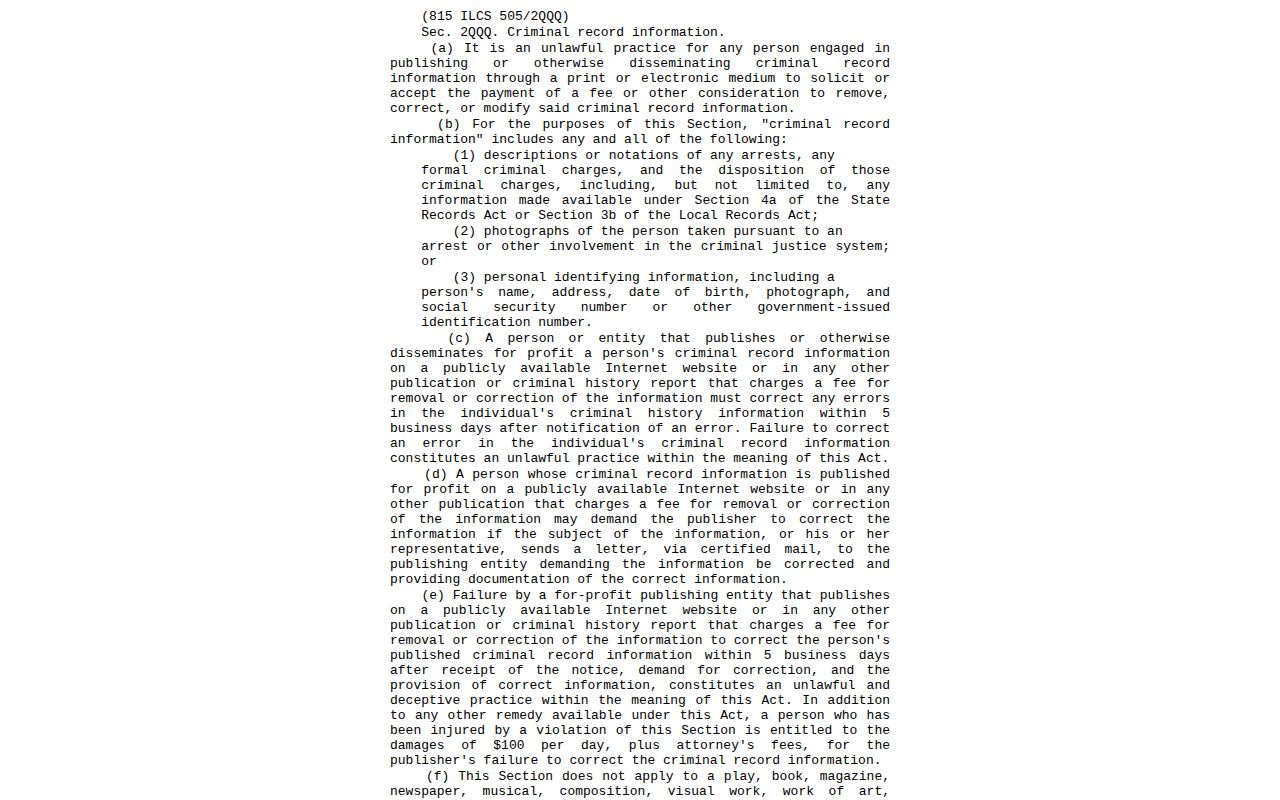
815 ILCS 505/2QQQ is the anti-pay-to-remove rule. Charging a fee to delete, fix, or alter covered record information is illegal, with limited statutory exceptions. The law does outline a correction path for qualifying errors once certified notice and documentation land in the right hands. It backs that up with damages and attorney-fee provisions. Treat it as legal context. It is not a promise that any particular page vanishes automatically.
Never pay a middleman to file a basic correction. Send the factual fix, the supporting documents, or a court order straight to the sheriff's FOIA officer. Sites like Busted Newspaper and RecentlyBooked run their own free removal procedures. Expect to supply the page URL, a booking ID or identifying details, the reason for the request, and proof. Those steps can change over time. They also have no power over the county record itself.
For a court-ordered fix, start with the Illinois Courts expungement and sealing forms. Eligibility and waiting periods hinge on the disposition and the governing law. Once a judge signs the order, serve it to the arresting agency, the Circuit Clerk, and every office the order names. Then push it through each unofficial site's free process. Search engines refresh only after the source page changes. A refresh never deletes the page itself.
The Illinois arrest-report statute frames what counts as public here. An unofficial image stays unofficial no matter how many sites copy it.
Keep three questions separate: what the statute allows the public to access, how the county corrects its own records, and what any private site chooses to do. They have different answers and different owners.
The anti-pay-to-remove statute appears here strictly as legal background. It is not an invitation to name or promote any paid removal service.
Want a record sealed or expunged? Start with the Illinois Courts forms page, the official source for that paperwork. Filing the forms is one thing. Qualifying for relief in a specific Fayette case is another question entirely.
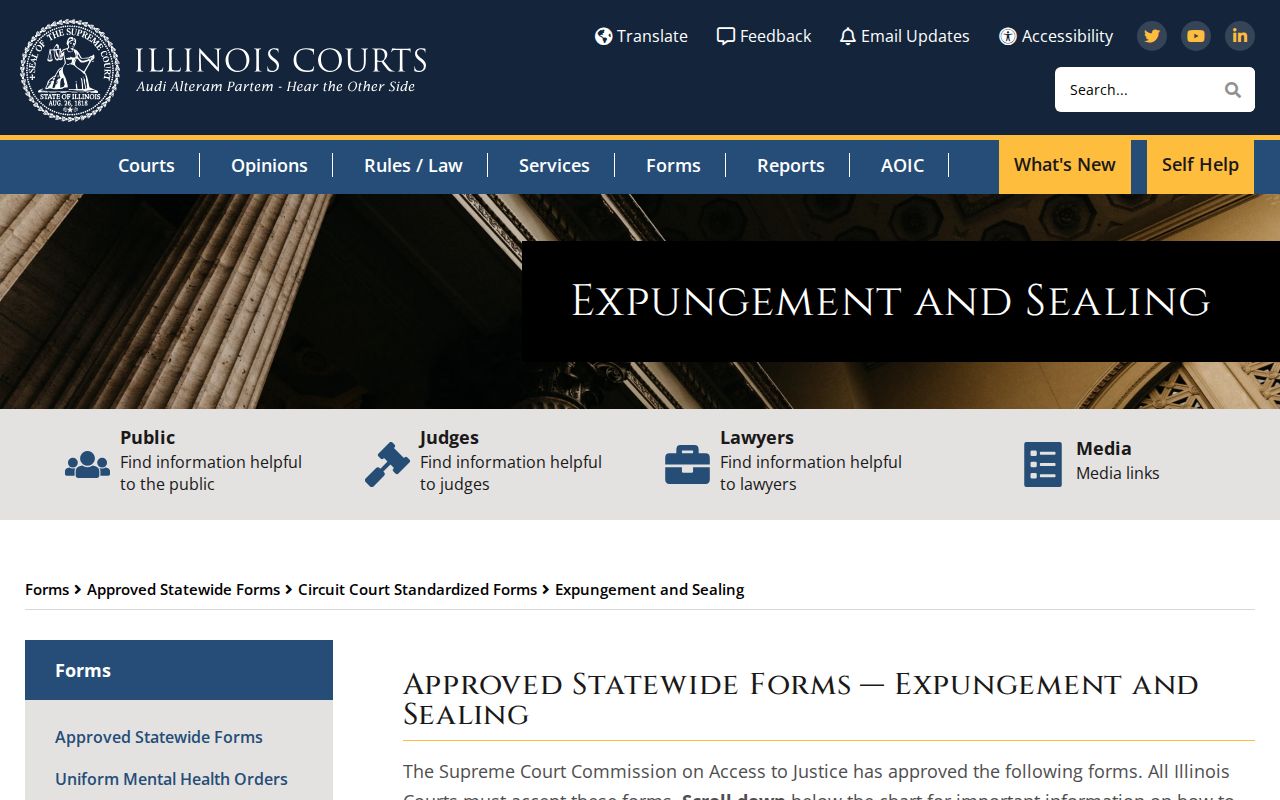
The forms create a single statewide process. Whether a Fayette case qualifies, when it can be filed, how it gets served, and what relief it brings all hinge on the case outcome and the governing law.
Fayette County Bond Details
Every bond posted through the Fayette County jail carries an added fee. The county's own inmate-information handout, published in 2024, puts it at $40. Pay by credit or debit and an 8% card fee stacks on top. A judge can also steer bond money toward court costs, fines, fees, or services.
Remember what these instructions are. They cover payment and release only. They will not tell you who sits in custody right now, and they are not a roster field. Payment rules change. Confirm the current procedure with the sheriff's office before posting anything. For bond details in a specific case, a FOIA request can ask for the bond within a defined record, while Judici serves better for court conditions that come later.
Keep the pieces separate. Bond, release, and the final court outcome are three events. A person can post bond and still face an open case, or stay held on another matter once one bond is settled. A third-party page listing a bond amount does not mean that person is still sitting in Fayette County Jail.
Find Fayette County Busted Mugshots
Start with the custody question. That single decision shapes every search that follows. Current jail status, a recent booking, a state-prison profile, a court outcome, a federal location, and an old booking photo are separate requests, and each official system answers only its own. VINE handles the first step well, since it tracks who is in custody right now. It is not documented as a source for photos, though, so treat it as a status tool only.
- Check VINE. Use VINELink or the Illinois Attorney General's VINE information page for custody or case status. Register for email, text, telephone, or app alerts when appropriate. The VINE phone is 1-866-566-8439, also written as 1-866-5-NOTIFY.
- Check official local channels. Review the sheriff page, county news page, and the relevant city police page. No qualifying Fayette roster, booking feed, or photo result view was located, so an announcement is not a complete list.
- Check the correct custody branch. Use IDOC if the person later entered state custody or parole. Use BOP, ICE, or USMS only when the source facts support that federal branch.
- Check the court file. Use Fayette Judici for the case, hearing, disposition, and available documents after booking. Judici is not a live jail roster.
- Request the record. Send the date-bounded FOIA request to the sheriff or the arresting city agency. Ask for a releasable photo if one was created.
Search names with care. When a name is common, pair it with at least two identifiers. Compare the arresting agency and the date, and note when you ran each search. A VINE no-result can mean many things: a spelling error, a different custody system, a release, or a record that sits outside the system entirely. Silence there is not proof that no arrest happened.
The county splits its alert and custody functions across systems. The VINE search appears below. It offers status updates and notifications, not a public gallery of Fayette mugshots.
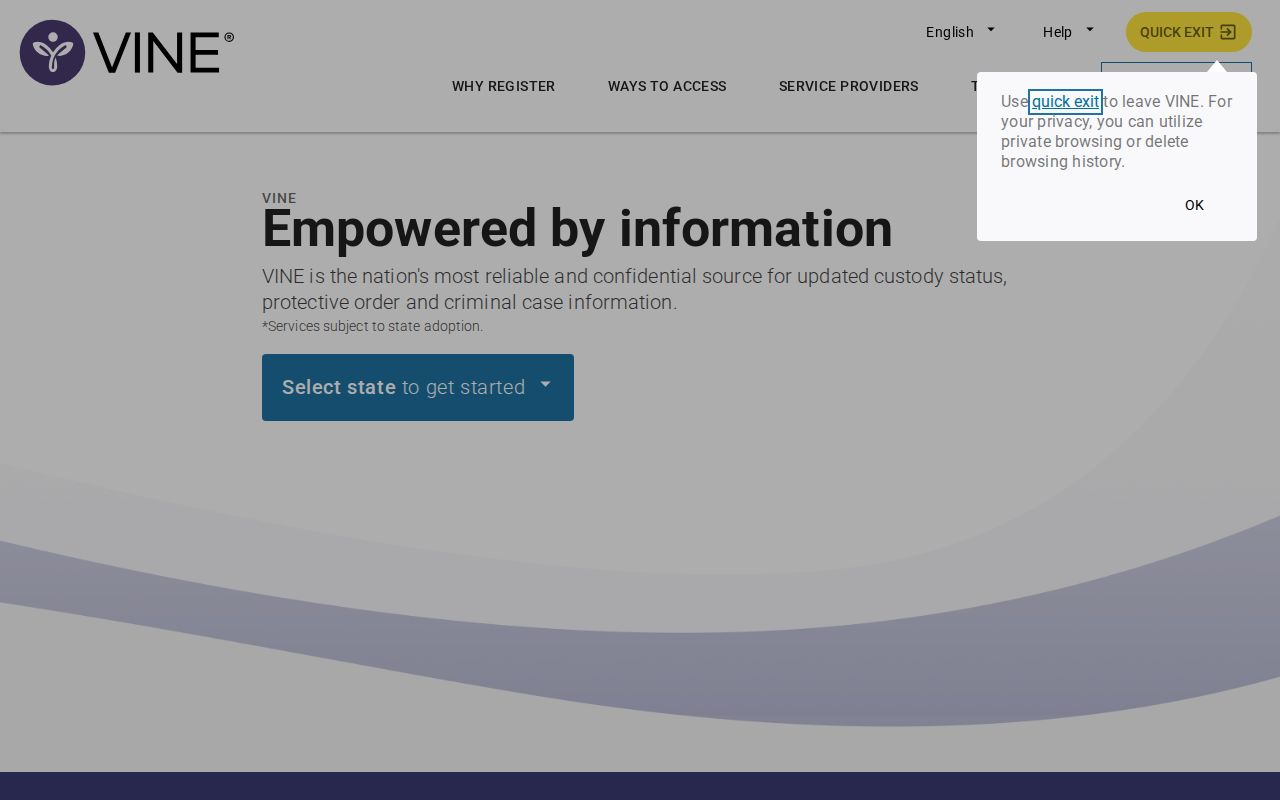
A VINE alert can tell you that custody or case status changed. That is its whole job. It is not a photo delivery service.
Fayette County Busted Sources
Start with official sources. The table splits them into custody, records, court, state, federal, news, and unofficial copy paths. Working with arrests does not guarantee photos either. No public Fayette County roster turned up in the official pages, and no routine booking-photo feed exists there either.
| Channel | Photo status | Authority and use |
|---|---|---|
| VINE | No photo promise in the official description | Official current-custody and notification path named by the county handout. |
| Sheriff FOIA | Photo when created and releasable | Official request path for county arrest, jail, and booking records. |
| City police records | Depends on the city record | Official incident-report path for Vandalia, St. Elmo, or the current Ramsey service arrangement. |
| Fayette Judici | Generally not a booking-photo source | Official court case, hearing, disposition, sentence, and document path. |
| IDOC search | Current state profile may show a photo | State custody or parole, not a new Fayette County Jail intake. |
| Local reporting | Agency or generic image may appear | Leader-Union, Vandalia Radio, and Effingham Radio are narrative sources, not live rosters. |
| Busted Newspaper, RecentlyBooked, and Mugshots.com | Unofficial copied or aggregated material | Fayette-local pages can be stale, incomplete, or remain after release. Compare with VINE, FOIA, and Judici. |
| Arrests.org and Mugshots.zone | No verified Fayette-local photo section | Illinois or other-state scope was checked, but no Fayette, Illinois section was verified as of the research date. |
Third-party sites fill a different role. They are not part of the county's record system. Busted Newspaper posts dated entries across pages. RecentlyBooked runs a recent-arrest display with an update label, and its own policy notes that posting frequency varies by county. Mugshots.com lets you browse by date or month, without promising any Fayette refresh schedule.
The three unofficial local pages may carry Vandalia, St. Elmo, or Ramsey entries when their data includes them. Complete city coverage is not promised. Illinois Arrests.org did not surface a Fayette-local section, and Mugshots.zone showed no verified Illinois Fayette page. Watch out for wrong-state lookalikes.
Busted and Booked in Fayette County
The county's own handout points custody questions to VINE. Beyond that, nothing official was found. There is no county-hosted roster and no booking-photo search. With no verified results view available, the public fields, photo display, update cadence, and persistence window all stay unknown. A generic jail-directory page is not the same as an official Fayette interface.
| Roster question | Fayette finding |
|---|---|
| Public current-custody URL | No county-hosted public roster located; the county handout points to VINE. |
| VINE search fields | Use the live Illinois form because exact fields can vary; the official role is custody and case status. |
| Booking number or charges online | Not verified on an official county result view. |
| Bond or booking photo online | Not verified; the handout describes bond payment, not roster display. |
| Update cadence or persistence | No county public-roster schedule or release-persistence rule located. |
| App roster or photo module | An official app exists, but the checked public source does not document this module. |
| Fallback | VINE for custody, sheriff or arresting-agency FOIA for records, Judici for court history. |
State the absence precisely. "No public Fayette roster appears in the official pages" is accurate. "Fayette County has no roster" overreaches, since an internal or newly launched system could exist without public notice. VINE answers custody questions and can send status alerts. Neither official description, however, promises a booking photo.
- Open VINE, select the Illinois service, and use the live identity fields. Record the check date.
- If there is no match, check spelling and identifiers, then consider release, transfer, another county, or another agency.
- Review the sheriff, county news, and city police pages for agency announcements. Do not treat an app or social post as a complete roster.
- Send a focused FOIA request for the county record and available photo. Use Judici for the later case rather than treating it as a jail search.
The sheriff's app and social channels show where the evidence stops. The Fayette County Sheriff's Office app share page names the official app. Its Google Play listing and Apple App Store listing give the store paths. What does the app cover? Agency updates, contacts, and alerts. A public booking-photo module is not among its documented features.
Facebook is one more announcement channel for the sheriff. Each post carries its own date and its own editorial choice. No post amounts to a complete arrest list.
Busted Last Night? Fayette Feeds
No official Fayette booking view exists on a same-day, 24-hour, 48-hour, 72-hour, weekly, or multi-day basis. Vandalia, St. Elmo, and Ramsey publish no qualifying city bulletin. The honest answer is an absence plus a fallback, not an invented posting schedule. Remember that a news timestamp marks when an outlet published, not when the county booked someone.
Vandalia Radio runs Fayette law-enforcement stories the same day or the next. The Leader-Union, a weekly, carries recurring Public Record items and sheriff arrest logs. Effingham Radio's blotter is frequent and leans toward Effingham. Still, Fayette warrants, transports, and regional events do appear. Each can help you locate an event. None is a full county booking feed.
Unofficial sites keep their own clocks. Busted Newspaper showed dated, paginated entries in the August 2026 view. RecentlyBooked displayed its recent-arrest label and update marker. Its guidance says frequency varies, sometimes daily. Mugshots.com offered date and month navigation with no stated Fayette cadence. Note each date you check. Then confirm custody through VINE.
No sourced Fayette rule covers weekend surges, overnight lag, or how long an entry stays up. Someone may be missing from the news because no story ran. Someone may vanish from a live custody result after release, or linger on an unofficial page long after. Those are different states. They should not be collapsed into one "recent arrest" label.
Fayette Busted Cases in IDOC
The Illinois Department of Corrections Individual in Custody Search covers a different part of the record. Its search uses last name, IDOC number, or birth date. The current public search returns people currently incarcerated or on parole, not everyone who completed a sentence. IDOC's media guidance says a current individual-in-custody photo can appear through the search, while photos of former individuals in custody are confidential under Illinois law.
Use IDOC in four checks. Search the official form with the available name, IDOC number, or birth date. Read the institution, status, admission or release details, and photo as state-custody information. Do not treat an IDOC match as a Fayette County Jail booking or as proof of the county case disposition. For an older state record outside the current search, use IDOC Contact Us and select the Record Search route with full name, birth date, year received, facilities, conviction county, and known dates.
IDOC lists a public telephone number of 217-558-2200. The state search can be unavailable during maintenance. A later state photo is not necessarily the original Fayette intake image, and it does not establish what happened to the county charge.
The IDOC search landing page shown here is a state-custody interface, not the county jail roster.
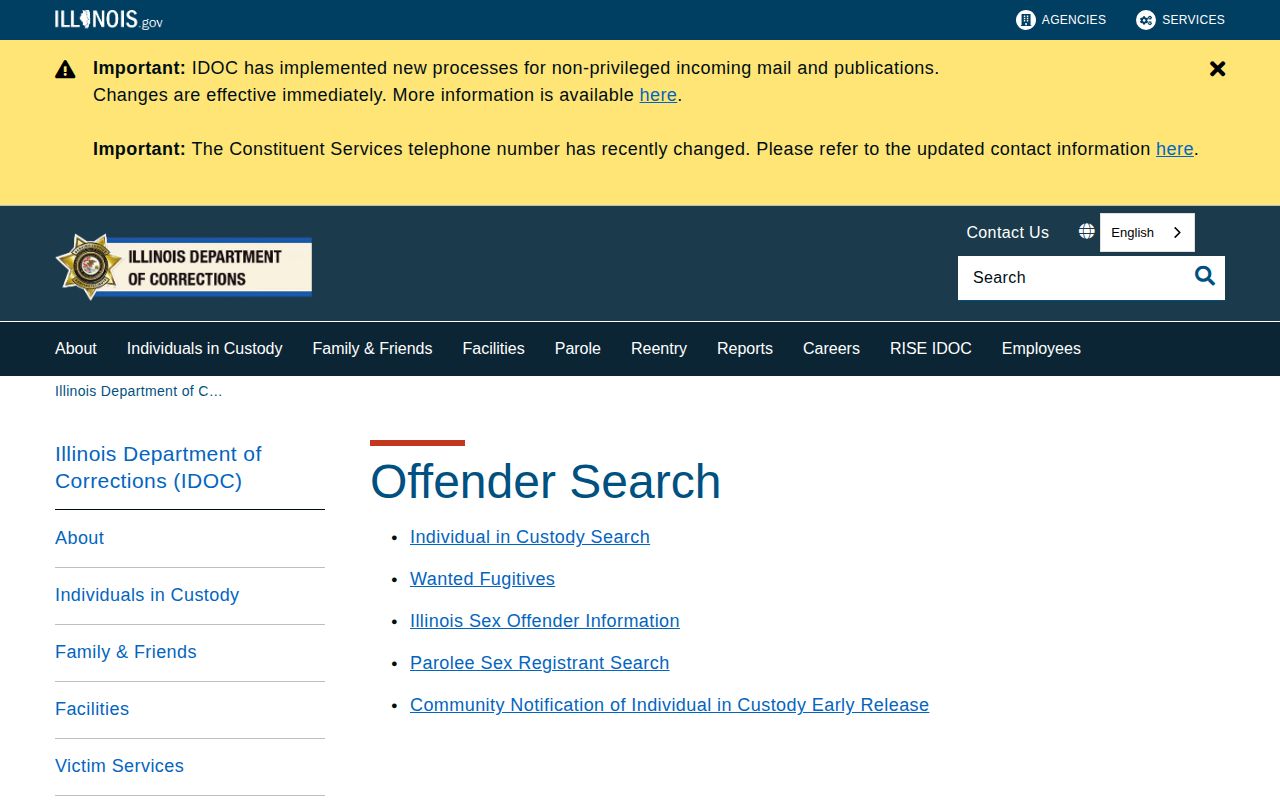
One confusing wrinkle in Fayette County searches is Vandalia itself. The city hosts a state prison, not just the county jail. Vandalia Correctional Center sits on Route 51 North, P.O. Box 500, Vandalia, IL 62471. The state lists its line as 618-283-4170. So a search result tagged "Vandalia inmate" can easily mean state custody rather than a fresh booking at the county jail.
IDOC media guidance draws a line between current and former individual-in-custody photos. That distinction matters when a photo's age is in question. The facility itself appears on the official Vandalia Correctional Center page. That page describes a state operation. It should never be confused with the county lockup on local busted searches.
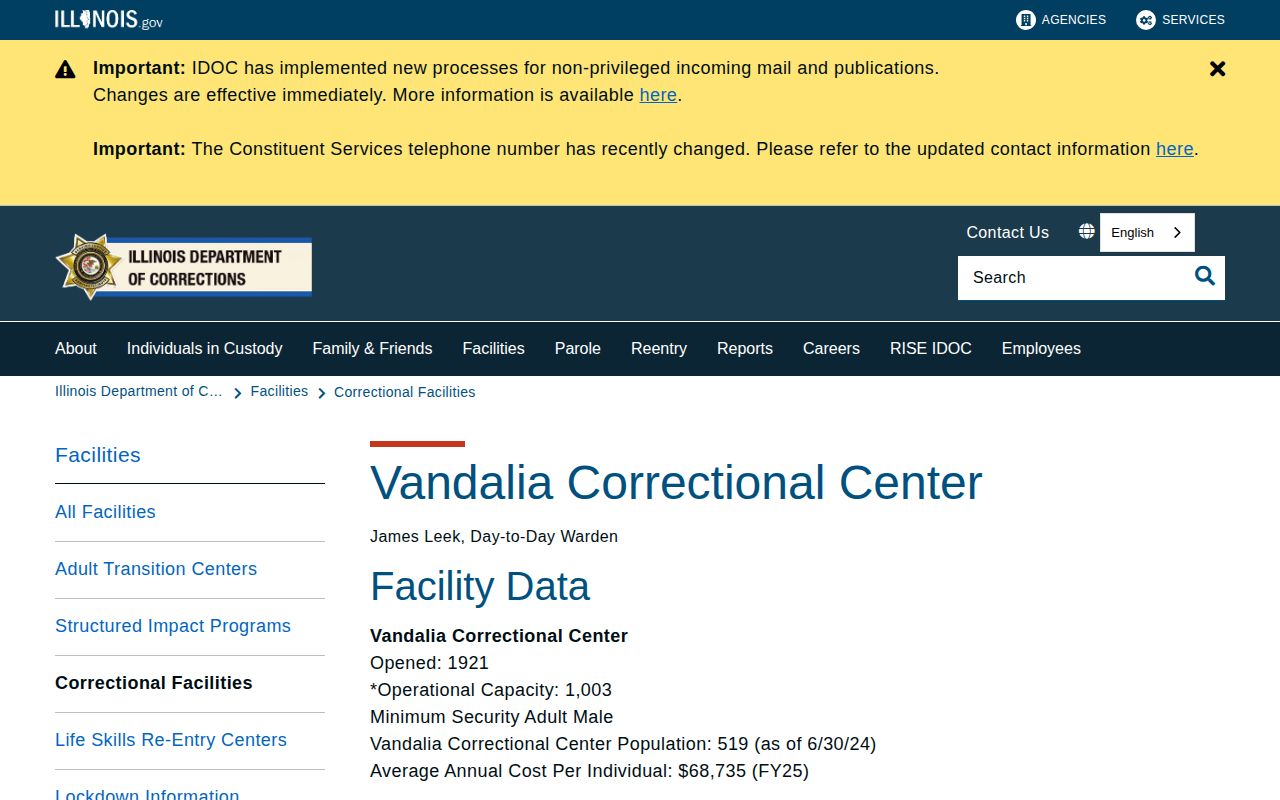
Vandalia can show up in three record worlds. State custody, county custody, and city arrest files may all carry the same town's name while pointing to different custodians. Keep the facility name written beside the record type. That way the two stay matched.
Fayette County Custody Changes
Where a record lives depends on where the person stands in the process. A live custody status sits in one place. An old booking sits in another. So does a prison profile, and so does a court disposition. No single search pulls them all together. The comparison below keeps those paths separate, so you know which door to knock on.
Just booked or still in Fayette custody: VINE is the official public status route. The county handout names it directly. A booking photo is not promised online. For a releasable record or image, ask the sheriff.
Released from Fayette custody: The person vanishes from a live custody result. The trail remains, though. An arrest record, booking record, court file, or unofficial copy can all outlast the stay.
Transferred or held for another authority: A transfer can point anywhere. Another county, a state agency, the federal system, or something else entirely. The transfer note alone tells you very little.
Sentenced or paroled through IDOC: IDOC is the right path for a current photo and status. It will not substitute for the county intake image.
Federal or ICE custody: BOP, ICE, and USMS each have separate scope. BOP runs no public booking-photo database. USMS generally does not release prisoner mugshots or personal histories either.
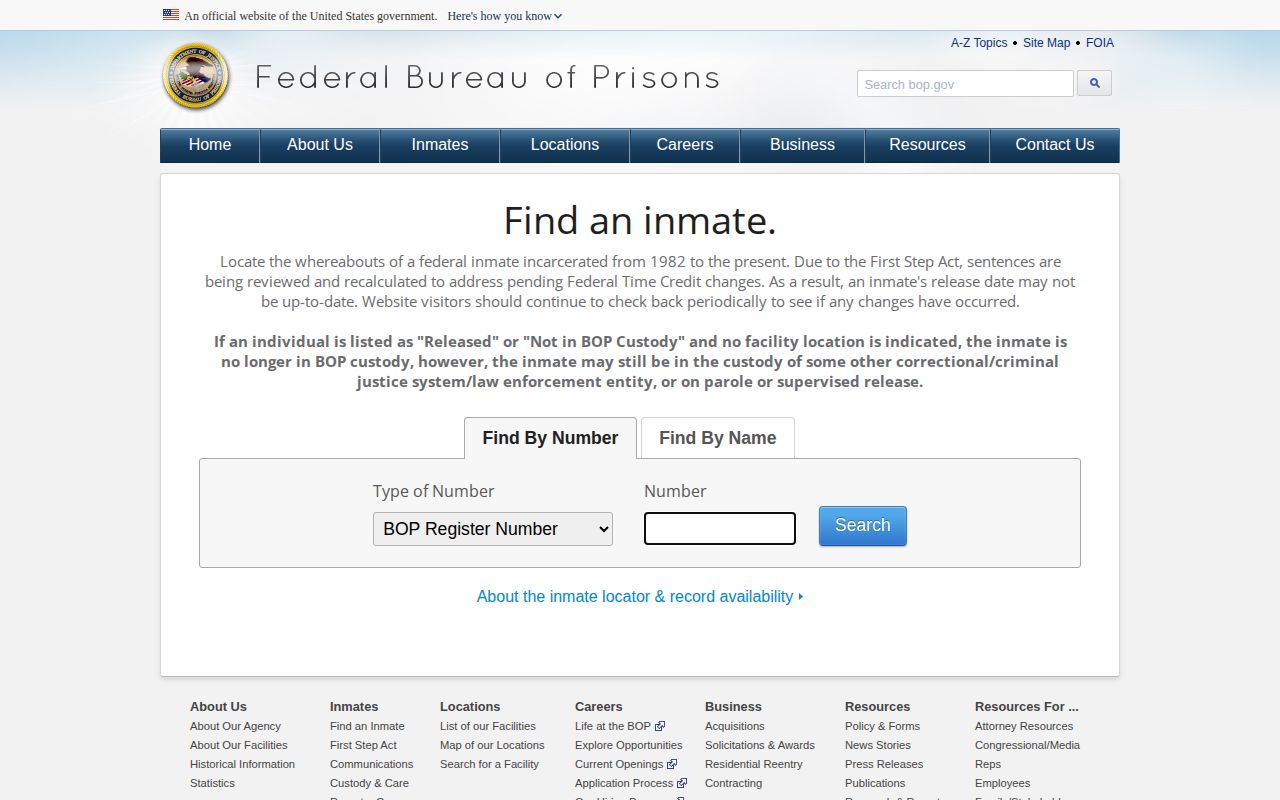
For federal questions, start with the Bureau of Prisons locator. It covers federal inmates from 1982 to the present. That scope excludes many federal detainees. It also has nothing to do with the Fayette County Jail. The ICE locator works differently. It requires the specific identity fields that system describes. A negative result from either tool proves nothing universal. Go with the agency named in the record. Do not guess custody from a transfer note. The Bureau of Prisons locator itself shows the scope limits and the absence of any booking-photo result path.
A record travels a sequence: arrest, booking and photo, custody status, release or transfer, court hearing, disposition, and possibly sealing or expungement. Every step changes who holds the file.
After a Fayette County Booking
Once the jail event is over, the Fayette Circuit Clerk carries the case forward. The office sits in Room 112 of the Fayette County Courthouse at 221 S. 7th Street in Vandalia, phone 618-283-5009. Walk-in hours run Monday through Friday, 8:00 a.m. to 4:00 p.m., except legal holidays. Most files are open to inspection, though juvenile, adoption, impounded, and sealed matters stay closed.
Online, the direct Fayette Judici court search serves up case numbers, charges as filed, hearing dates, minutes, dispositions, sentences, and whatever documents the system carries. It is not a jail roster. It plays no booking-photo role. Statewide Judici information places Fayette files back to 1988, subject to coverage gaps and exclusions, with updates described as roughly monthly. For anything current, the clerk remains the verification route.
The legal path can wind through a first appearance, bond conditions, amended charges, pleas, dismissals, acquittals, judgments, and sentences. What was booked first is only the opening chapter. A news item or unofficial page may keep the original charge alive long after the court changed it, so Arrest News is useful for narrative context while the docket controls the outcome.
Check the disposition. A case can shift course after booking, and the final court entry is the one worth reading.
Copies from the clerk carry their own fee schedule. The first page costs $1. Each of the next 19 runs 50 cents, and pages after that run 25 cents each. Emailed information runs somewhat higher, per the clerk's description. Note that these are court-copy rules, not the sheriff's FOIA fee schedule.
When a case never appears online, lawful explanations abound. Confidentiality could be the cause. So could sealing, a case not yet indexed, a spelling error, or a different custodian. Ask the clerk instead of treating repeated name searches as proof of anything.
Busted Records and Juvenile Limits
Juvenile records sit behind a wall. The 2025 Fayette County Jail inspection reports no juvenile beds and states that juvenile records stay protected from public inspection except for an appropriate authority. That protection does not mean nothing ever happened. It means an adult booking page or a copied site can never lawfully identify a minor, so treat those outlets as closed doors on this subject.
Illinois public-record and court rules draw similar lines around adoption files, sealed material, impounded material, victim-identifying details, medical data, fingerprints, and property records. A FOIA response sometimes withholds a field, and when it does, the cited basis is the answer. Do not chase a duplicate from an unofficial page. The sheriff's records officer can say whether a record exists and what may be released, and the Circuit Clerk handles court-file access. Those channels beat a search result every time.
Old Fayette County Records
Old Fayette County booking photos have no ready archive path. Illinois State Archives guidance says the Local Records Commission approves retention schedules. No agency may destroy records without that authority. No Fayette-specific retention period for booking photographs surfaced in any index. The Fayette IRAD holdings cover historic court, county, city, and Farina police-magistrate material. Yet a modern jail-register or sheriff booking-photo series is absent from the public index. Historical material may still exist somewhere. The public path just does not hand it over.
For an actual request, the Fayette IRAD page names the courthouse and the UIS depository. Requests go by mail or phone through that depository. Never by email. Ask both the holdings search and the sheriff's FOIA officer which custodian and schedule cover your date range.
- Identify whether the question concerns a county intake, city arrest report, court file, state profile, or federal record.
- Ask the sheriff or arresting agency which approved schedule and custodian cover the date.
- Search the Fayette IRAD holdings and contact the listed depository by mail or phone for historic material.
- Ask the Circuit Clerk about the court file, keeping that file separate from the original booking image.
- If an unofficial page is the only surviving copy, label it unofficial and use its free correction path rather than calling it a county archive.
Fayette's facility numbers deserve a careful read. The 2025 IDOC inspection puts Fayette County Jail at a 60-person total capacity. The Illinois Sheriffs' Association directory lists 76 beds. Do not average the two. The state inspection is the stronger current source. The gap is worth asking about rather than smoothing over. Vandalia Correctional Center is a separate state facility entirely, with its own custody system.
An old arrest image can outlast a release, a changed case, or a court order. Find the custodian. Request a lawful answer. Read the disposition before relying on anything stored.
Busted Mugshots by Fayette City
The city map routes you; it does not create three jail systems. A city officer has options. They might cite and release someone, transfer them, or book them straight into Fayette County Jail. That choice determines who holds the paper. City incident records and county booking records can sit with different custodians as a result. So follow the county path first. Start with VINE and the sheriff FOIA route. Then hit the city office for the incident report.
- Vandalia Busted Mugshots: Vandalia Police lists 219 South Fifth Street and 618-283-2131 for non-emergency contact. Its checked page did not show a public arrest log or booking-photo feed. The city FOIA page posts a request form and shows 618-283-0556 for the Public Safety Building.
- St. Elmo Busted Mugshots: St. Elmo Police lists 108 W. 4th Street and 618-829-5113, says it is available 24/7, and says it patrols St. Elmo, Brownstown, and Ramsey. No public city arrest log or photo feed was located.
- Ramsey Busted Mugshots: the village police department was dissolved in September 2022, and the current St. Elmo police page describes Ramsey patrol coverage. Use the village site for municipal records, St. Elmo for the current service arrangement, and the sheriff for a county booking record.
Local news may name all three places. News is not a city roster, though. A third-party Fayette page can label an entry by town, and that label still proves nothing about current custody. Stick with the county path. VINE answers status. FOIA gets the record. Judici tracks the case.
Fayette County Booking Terms
These terms tangle easily once a name shows up in several systems. Each one marks a different point along the Fayette record path, and mixing them leads searchers to the wrong office.
- Booking
- Jail intake after an arrest or transfer. It can include an intake photo and administrative record.
- Arraignment or first appearance
- An early court event after booking where the case and release conditions may be addressed.
- Bond
- A court or jail release condition. Paying bond does not end the case.
- Disposition
- The later court result, such as dismissal, plea, acquittal, or judgment.
- Expungement or sealing
- Legal processes that can restrict or remove records under governing rules. Eligibility depends on the case.
Qualify the word "recent," too. It might describe a fresh arrest, a new news post, a current custody result, or a page updated yesterday. A source date plus a custody label clears up which one you are looking at.